The Face of Animal: A Sketch-Style Dingbats Font for Crafters
If you have ever hunted for a font that feels like it was drawn by hand with a pencil on rough paper, then The Face of Animal is the dingbats typeface you have been waiting for. As a maker who spends hours designing labels, stickers, and printable products, I have learned that the right set of characters can transform a simple project into something that feels personal, artful, and worth buying. This font delivers exactly that—a sketched, slightly raw charm that stands out in a sea of polished vector icons.
Let me walk you through what makes The Face of Animal special, how you can put it to work in your handmade business, and why it deserves a spot in your font collection.
What Is The Face of Animal?
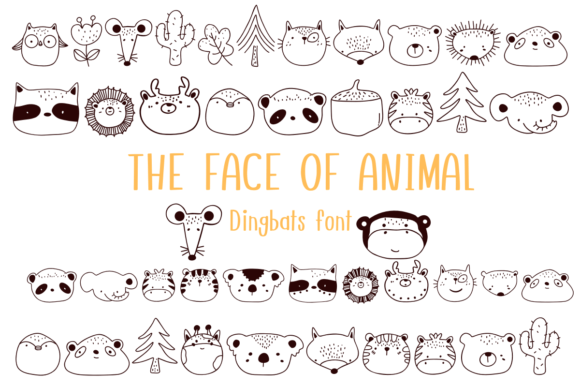
The Face of Animal belongs to the dingbats category, which means it is a collection of pictorial symbols rather than standard letters. Each character is drawn in a sketchy, hand-rendered style with visible line weight variation, slight unevenness, and an organic feel. This is not a clean, corporate icon set. It is a font that looks like it was pulled straight out of an artist’s notebook. The animals are expressive, loose, and full of personality—perfect for projects where you want a handcrafted, whimsical, or rustic aesthetic.
Because it is a dingbats font, you type a letter or number and get an animal face instead. This makes it incredibly easy to use in any design software, on a Cricut or Silhouette cutting machine, or in a template for printable products. No need to place individual images—just type and scale.
Where The Face of Animal Shines in Handmade Products
As a seller on platforms like Etsy, I am always looking for design assets that save time while making my products look unique. The Face of Animal has become my go-to for several types of projects.
- Labels and Stickers – Whether you are making jar labels for homemade jam, candle labels with a farmhouse feel, or sticker sheets for kids, these animal faces add an instant hand-drawn touch. The sketch style works beautifully when printed on kraft paper or matte sticker paper.
- Greeting Cards and Invitations – For birthday invites, baby shower cards, or thank-you notes, a single animal face from this font can serve as the main decorative element. Pair it with clean typography, and you get a card that feels custom-illustrated without the cost of commissioning art.
- Wedding Stationery – Rustic and outdoor weddings are a perfect match for The Face of Animal. Use a deer, fox, or bear face on save-the-dates, welcome signs, or escort cards. The sketched style complements natural themes, burlap textures, and wildflower motifs.
- Wall Art and Printables – Create printable art prints for nurseries, children’s rooms, or cabins. A single large animal face framed in a simple layout sells well as an instant download. The organic lines make each piece feel like original artwork.
- Product Packaging – For small-batch makers, packaging is part of the product experience. Add an animal face to a soap box, a tea tin, or a tote bag tag. It tells customers that your brand cares about aesthetics and craft.
- Seasonal Crafts – Think of autumn market signs with a sketched moose, or Easter egg labels with a rabbit face. The font works year-round and can be rotated with different animals for each season.
Readability and Practical Cutting Machine Tips
One concern crafters often have with sketch-style fonts is whether they will cut cleanly on a machine or print clearly at small sizes. With The Face of Animal, the line thickness is consistent enough that the icons hold up well. Here is what I have found in my own projects:
- For cutting machines (Cricut, Silhouette): Use the font at least 1.5 inches tall for single-layer vinyl cuts. The sketched strokes are not too thin, so weeding is manageable. For layered projects, the open spaces in the faces allow you to add contrasting colors behind them.
- For small stickers: At 0.5 to 0.75 inches, the details remain clear when printed at 300 dpi. Avoid going below 0.4 inches for glued paper stickers, as the sketch lines may blur on porous media.
- For product labels: This font works best as an accent rather than body text. Keep the animal faces around 0.8 to 1.2 inches on a standard 2×3 inch label. They draw the eye without overwhelming the product name or ingredients.
- For digital mockups: If you sell templates or PNG designs, the font scales well. I have used it in water bottle mockups and it reads clearly at screen resolution.
How the Font Affects Product Presentation and Brand Identity
When a customer sees a product with hand-drawn artwork, they subconsciously assign more value to it. The Face of Animal gives your packaging and printables a bespoke feel. It signals that you took the time to design something with soul. In a marketplace where many sellers use generic clip art, this font differentiates your brand.
Because the font is decorative and somewhat bold in its sketchiness, it works best as a display element. Use it for logos, main titles, or featured icons. For consistency, consider using the same animal face across your product line. For example, a deer face on your candle labels, your social media avatar, and your thank-you cards creates instant brand recognition. Customers will start associating that sketched deer with your handmade quality.
Emotionally, the font feels approachable, nostalgic, and handmade. It pairs well with natural materials like wood, twine, and linen. If your brand voice is warm, rustic, or playful, this dingbats font reinforces that tone without saying a word.
Font Pairing Ideas for Complete Designs
Using The Face of Animal alone can be limiting if you need to include actual text. For invitations, labels, and signs, you will want a complementary font that balances the sketchy icons. Here are pairings that work well in my own shop:
- Pair with a clean sans serif – A font like Montserrat or Open Sans keeps the design modern and readable. The neutral sans serif lets the animal faces be the star. Use the sans serif for product names, ingredients, or event details.
- Pair with a handwritten script – For a boho or organic look, combine the animal faces with a relaxed script font (for example, something that mimics brush lettering). This is great for wedding welcome boards or artisan soap labels. Just ensure the script is not too ornate—you want the sketched animals to stay legible.
- Pair with a bold serif – For farmhouse-style decor, a thick slab serif or a sturdy Clarendon-style font adds weight and contrasts nicely with the light, airy sketch lines. This pairing works for signs and wall art.
- Pair with a simple dingbats border – If you have a second dingbats font with decorative frames or corners, you can frame the animal face for a complete composition. But be careful not to overcrowd—the beauty of The Face of Animal is its simplicity.
What to Check Before You Use The Face of Animal Commercially
Before you start selling products with this font, there are a few technical points to verify. The product description tells us it is a dingbats font with a sketched theme, but it does not list specific file formats, alternates, or ligatures. Here is what I recommend you look for in the actual product listing:
- File formats: Ensure it includes OTF (OpenType) and TTF (TrueType) for compatibility with Windows, Mac, Cricut Design Space, and Silhouette Studio. Some designers also include WOFF for web use if you sell digital templates.
- Alternates and ligatures: Many dingbats fonts include multiple versions of the same animal to avoid repetition. Check if the listing mentions stylistic sets or alternate glyphs. If it does, you can use different faces for different products under the same brand.
- Multilingual support: Not critical for a dingbats font, but if you need accented characters for project titles, confirm they are included.
- Commercial license: This is the most important. The Face of Animal is likely sold under a standard commercial license that allows you to use it in physical products for sale (stickers, labels, shirts, mugs, etc.) and in digital printables (PDFs, templates) that are sold to customers. However, you may not be allowed to embed the font directly in a digital file where the customer can extract it. Read the license terms carefully. If you plan to sell SVG cut files that include the font outlines, ensure the license covers that use case. When in doubt, contact the font designer.
I always keep a folder with purchase receipts and license PDFs for every font I use commercially. It protects my business and shows professionalism if a designer ever audits my shop.
Final Practical Uses for Your Shop
Here are a few more project ideas that work especially well with The Face of Animal:
- Boutique clothing tags – Print the animal face on a small hang tag with your brand name underneath. It adds a custom feel to handmade apparel.
- Custom stamps – Some sellers convert the font into a rubber stamp for packaging or journaling. If you go this route, make sure the sketch lines are thick enough to transfer cleanly.
- Social media graphics – Use the font as a watermark or icon in your Instagram posts. It reinforces your brand across platforms.
- Holiday product packaging – At Christmas, a reindeer face from the font can replace generic clip art on gift tags and treat boxes. For Halloween, a cat or bat face works perfectly.
The Face of Animal is not just a set of icons—it is a design tool that brings warmth, personality, and a handcrafted feel to every product it touches. As a crafter and seller, I value fonts that save me time while making my work look like it took hours to illustrate. This dingbats font does exactly that. Give it a try in your next label, invitation, or printable, and watch how those sketched animal faces connect with your customers in a way that polished vectors never could.